


What you will learn in this chapter:
- Why retail leaders are cautiously optimistic
- The driving factors helping brands achieve this year’s sales forecasts
- The biggest challenges facing the sector, from macroeconomics to regulation, and how CEOs plan to mitigate costs
In 2025, retailers have grappled with a complex macroeconomic environment, marked by persistent inflation, elevated interest rates, changing consumer demand and rising operating costs – particularly in relation to wages and logistics. Uncertainty around global trade and political tensions are applying further pressure to margins and disrupting planning cycles.
The UK economy, meanwhile, continues to experience muted growth – KPMG forecasts real GDP growth of 1.2% in 2025, edging up just slightly from 1.1% in 2024.
This may explain why 79% of retailers expect sales growth in 2025, a slight downgrade from last year’s report, in which 85% forecast growth for this year when interviewed in 2024.
However, 24% of retailers expect sales to be much higher this year, compared with the 13% in 2024 who predicted this for the approaching year. This suggests that, for a significant minority, the right strategy is paying off.
Finishing out the year strong and enjoying a successful golden quarter is, of course, critical for retailers to flourish in 2026.
What will the new year bring?
Next year, KPMG forecasts a marginal downtick in UK GDP growth to 1.1%, bringing it level with Europe’s largest economy, Germany, but higher than the 0.8% forecast for France. The Organisation for Economic Co-operation and Development (OECD) expects UK GDP growth to be lower, at 1% (versus 1.4% forecast in 2025, as of September), dampened by persistent trade tensions, tighter financial conditions and elevated uncertainty.
Consumer price inflation was at 3.8% as of August 2025 – up from 2.6% in September 2024, two months after the current Labour government took the reins – figures from the Office for National Statistics reveal. The OECD is forecasting similar numbers, anticipating 3.5% inflation for 2025, and that the UK will therefore have the highest inflation in the G7 group of major advanced economies during 2025.
The Office for Budget Responsibility’s forecast in March, outlined that consumer price inflation will peak at 3.8%, and average 3.2% for this year before falling to the Bank of England target of 2% in 2026, as energy prices stabilise and food price inflation decreases – music to retailers’ ears.
Next year, 85% of the chief executives we interviewed expect total sales growth, and 24% of those forecast much higher sales – on a par with the 24% who predicted much higher sales for 2025.
What the CEOs said
Despite the formidable economic, geopolitical and policy-driven challenges facing UK retailers, there is cautious optimism about the year ahead. For many leaders, 2026 represents a turning point – a year when investment in propositions, digital transformation and operational efficiency will begin to bear fruit.
“There’s a lot of pent-up savings still in the economy,” says Wickes chief executive David Wood. “As interest rates start to come down, that will start to flow back into the market. Maybe some of those delayed purchases will start to be unlocked.”
The Very Group chief executive Robbie Feather shares a similar sentiment: “Our business has gained momentum… we hit that sort of post-Covid bottom for online retailers and we’re now out the other side of that. As I look into 2026, I would expect that to continue.”
Others, such as Holland & Barrett chief executive for wellness solutions Tamara Rajah, are pressing ahead with growth strategies grounded in evolving consumer habits.
“We don’t see our growth stopping,” she says. “We’ve got transformation initiatives landing, and we just launched our first experience store in Cardiff.”
The Cotswold Company chief executive Ralph Tucker is similarly buoyant: “We’re faintly obsessed with customer feedback. We’ll have more store openings, exciting stuff in digital and AI-driven opportunities, and great work around the brand and product.”
Across different formats, the tone is also hopeful. “I think our sales will be higher again in 2026,” says BP vice president (managing director) for mobility and convenience UK Joanne Hayward.
“We’re doing a lot of work on format development with Marks & Spencer, investing in our loyalty proposition and expanding our electric vehicle charging.”

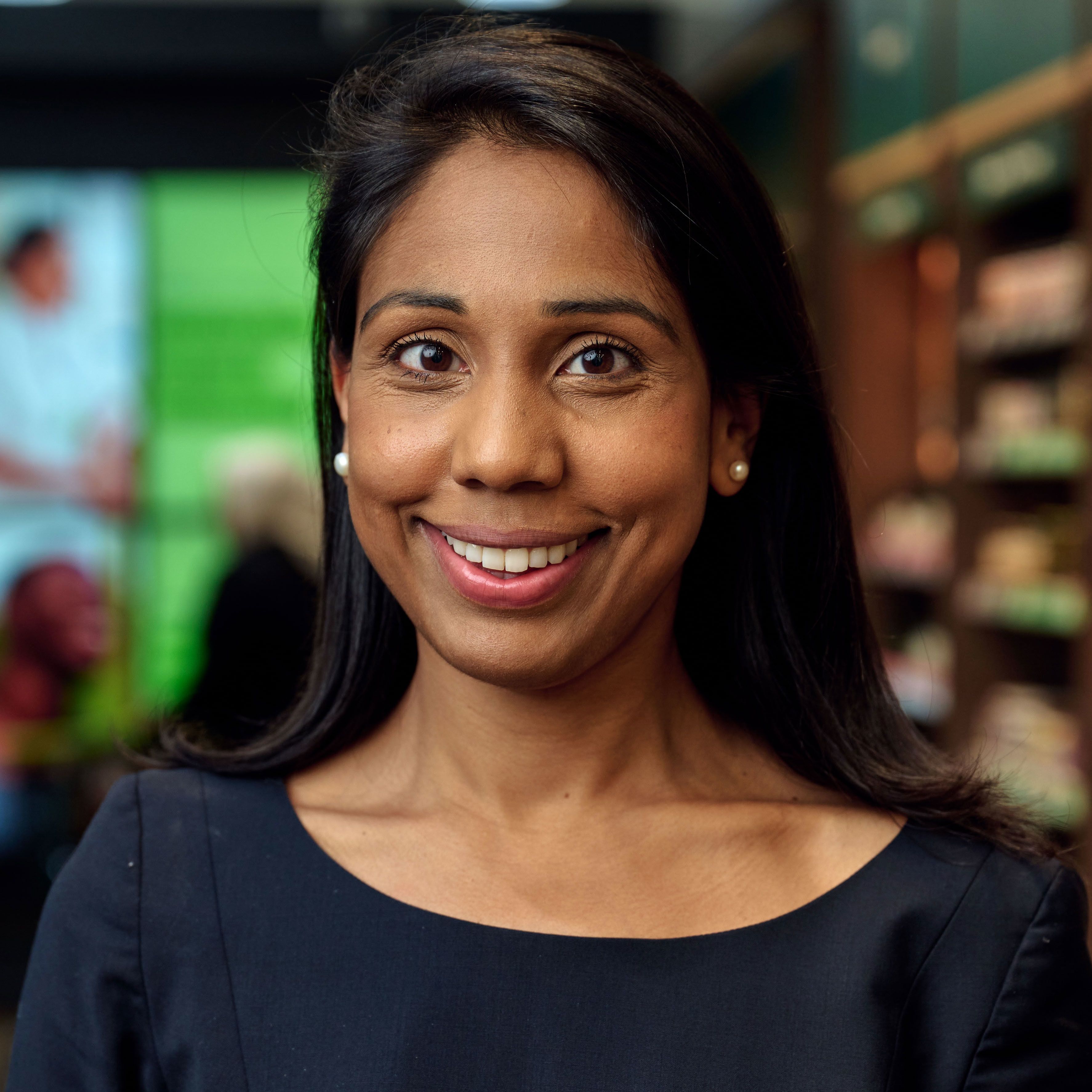
“We don’t see our growth stopping. We’ve got transformation initiatives landing and we just launched our first experience store in Cardiff”


“We’re faintly obsessed with customer feedback. We’ll have more store openings, exciting stuff in digital and AI-driven opportunities”


PureSeoul is tapping into the current trend for K-beauty (PureSeoul)
PureSeoul is tapping into the current trend for K-beauty (PureSeoul)
For some, on-trend product is paying dividends. PureSeoul co-founder and chief executive Leslie Tang points to ambitious triple-digit revenue growth.
“With the momentum already building, we’re confident that 2026 will be the year PureSeoul transitions from being the UK’s K-beauty leader to becoming a global retail force,” he says.
The global Korean beauty market is valued at around £8bn, according to Future Market Insights, and expected to grow to £15bn by 2035.
Similarweb showed PureSeoul’s website received an average of 365,200 visits between December 2024 and February 2025. As a comparison, K-beauty competitors Skin Cupid, Skinsider and Korean Skincare saw 310,800, 176,000 and 134,200 visits over the same period.
PureSeoul has amassed more than 65,000 followers on TikTok, with over 1.6 million likes, and more than 112,000 followers on Instagram.
Planning amid chaos
Yet, while outlooks are generally positive, retailers are scrambling to plan against a backdrop of profound uncertainty. From inflation and interest rates to tariffs and shifting government policy, the variables are many.
“We are a fairly agile business. So we do adjust within the strategic cycle depending on what‘s going on, but we‘ve got a five-year plan and we're fairly optimistic we‘ll get to that,” says Majestic Wine chief executive John Colley.
However, our interviews show that not all retail leaders are now planning that far in advance. Three years ago, 32% were most likely to plan five years ahead – the most popular choice. Today, however, that figure has halved to just 16%. Instead, 37% are now most likely to plan three years ahead, while 16% and 18% respectively are only looking one or two years forward.
For the grocers in particular, agility has to become second nature, explains Morrisons chief executive Rami Baitiéh: “I wouldn’t change the five-year plan. What I would change is to make sure that my company is so agile, so flexible, that we can change direction at any moment when it is needed.
“If the market enters high inflation, for example, we need to be very agile to respond in terms of value. If, for example, tomorrow there are tariff issues or world export issues, we need to be agile to address an availability problem. If there were a shortage in terms of labour in our sector, we need to be agile in order to address this labour shortage.”
This sense of responding to chaotic macroeconomic conditions and a changeable political climate was a thread that ran throughout our interviews.
The Entertainer chief executive Andrew Murphy says: “In the UK, it feels like public and fiscal policy is subject to much more frequent review. So one of the things about when the chancellor made the changes to National Insurance [contributions by employers], it’s not just that they were profound; it’s that they were almost the diametric opposite of what retailers had been led to expect.
“And then with Trump in the White House, the Middle East obviously unstable, China unpredictable – that all kind of nets together. It’s not impossible to strategise over the three-year term, but a six-month strategy should be your primary focus.”
Not On The High Street chief executive Jessica Nesbitt echoes this realism. “There are some headwinds that may continue into 2026. US tariffs have the potential to create reduced demand for UK exports and there could be more stock to clear on the UK market.
“Similarly, if US demand for Chinese goods decreases due to tariffs, then they’re going to look for other places to move that stock. So more people piling into the UK could put downward pressure on pricing and upward pressure on the cost of marketing,” she warns.
Retailers are responding by sharpening operations and limiting exposure. “We are remote-first and have a really flexible approach to workspace,” says Nesbitt. “We’re pretty agile in our ability to manage the cost base.”
Sosandar co-founder Ali Hall also emphasises the importance of agility: “It’s not really a question of ‘are things going to happen externally?’ They always do. You just don’t know what they are. So it’s having an agile enough business that you can react.”
The chief executive of one fashion retailer reflects the industry’s evolving mindset: “We are chasing our 1% – all about improvement. Lots of little incremental wins. We’re reviewing every single role and have launched an efficiencies programme, particularly with AI.”


“US tariffs have the potential to create reduced demand for UK exports. Similarly, if US demand for Chinese goods decreases, they’re going to look for other places to move that stock”


“It’s not really a question of ‘are things going to happen externally?’ They always do. You just don’t know what they are. So it’s having an agile enough business that you can react”


“We’re forecasting a 4% increase in total costs, but 65% of that base cost is labour”


“Looking to 2026, there will be a continued focus on tight cost control as we prioritise the profitability of the business”


“Volatility has been the biggest challenge in the financial year 2025, whether it’s the employer National Insurance contributions and real Living Wage increases or US tariffs, and volatility remains a concern for the financial year 2026”
Profitability and cost mitigation
One consistent theme running through every executive’s forecast is margin pressure. Labour, logistics, rent, taxes and regulation are converging to drive operating costs up across the board.
“The biggest threat to profitability is disruption to consumer demand,” says the chief executive of a premium fashion retailer, citing a news environment filled with global conflicts and financial uncertainty.
In particular, labour costs are weighing heavily on retailers’ finances. On April 1, 2025, the National Living Wage for those aged 21 and over increased from £11.44 per hour to £12.21, and the National Minimum Wage for 18- to 20-year-olds rose from £8.60 per hour to £10.
In addition, chancellor Rachel Reeves announced in her autumn Budget that employers’ National Insurance contributions would rise from 13.8% on salaries above £9,100 a year to 15% on salaries above £5,000 from April 6, 2025.
We asked retailers how much their total costs – not just labour costs – were going up. Of the 39 businesses we interviewed, 16 answered this question, with cost rises ranging from between 2% to 20% and averaging at 7%.
“We’re forecasting a 4% increase in total costs,” says BP’s Hayward, “but 65% of that base cost is labour.”
At Not On The High Street, people and marketing are the biggest costs. Nesbitt puts it plainly: “Everyone will have seen per-head costs increasing. What we’ve done in reaction to that is just seek ways to optimise the team’s productivity, to really try to mitigate those rising expenses.
“We’ve really taken steps to ensure we’ve got the right staffing profile for the year ahead. So our operating costs are in a good place. We’re really empowering the teams with tools and technologies so they can do their jobs really well.”
The business is also creating efficiencies in marketing. “We’re reallocating media spend from traditional to digital channels for efficiency,” she says.
BrandAlley chief executive Rob Feldmann says the government changes on wages and National Insurance have been “very significant for us as a business,” estimating cost increases of around £750,000 due to the hikes (as a 12-month increase from when charges happened last April).
“Growing margin is truly difficult at the moment,” he says. “Everything is more expensive, but we’re using AI in the call centre and across the website to drive efficiency.”
Meanwhile, others are investing in automation and digital to offset pressure. James Rigg, chief executive of Trojan Electronics, a subsidiary of Buy It Direct group, says: “Much more automation in our warehouses is the key thing. We’re not planning job cuts – we want to grow without growing headcount.”
Matalan chief retail officer Katherine Davis says: “The whole industry is feeling the impact of weaker consumer confidence and these so-called ‘enforced’ costs. Matalan worked hard to drive a gross margin improvement of 3% to £510m in our financial year 2025, which can be attributed to our rationalisation of the supply base and improvements in our buying strategy.
“Looking to 2026, there will be a continued focus on tight cost control as we prioritise the profitability of the business.”
Focusing on automation to improve efficiencies is a common theme. Davis adds: “We’re taking action across the business to drive greater efficiency, freeing up teams to spend time with customers, for example, by investing in a new self-scan till system… and, significantly, in automation and robotics in the supply chain.”
Strategic sourcing and pricing also play a role. “We’re focused on tight cost control,” says Clarendon Fine Art managing director and former boss of fashion retailer Jigsaw Beth Butterwick. “We’re looking at operations, transport and gallery-level ROI.”
Seasalt chief executive Paul Hayes says: “Volatility has been the biggest challenge in the financial year 2025, whether it’s the employer National Insurance contributions and real Living Wage increases or US tariffs, and volatility remains a concern for the financial year 2026.
“Our largest margin drivers for FY26 include structuring our international operations to drive greater profitability (bonded warehouse) and continuing to manage our cost base.”
All of the retailer leaders we spoke to were laser-focused on keeping costs down. The Works chief executive Gavin Peck says: “We achieved sustained product margin growth in FY25 (+200bps vs FY24), driven by supplier negotiations, reduced markdown activity through better stock management, more targeted promotional activity and control of product mix.
“We will continue focusing on these initiatives in FY26, with the ambition of delivering product margin growth in the years ahead.”
Growth without borders
Retailers are increasingly looking abroad for scale and insulation from UK-specific volatility. From continental Europe to Asia, the search for growth markets is gaining pace.
“We see Continental Europe and India as our two big focuses,” says the chief executive of a premium fashion retailer. “They were already in the plan, so it’s not a knee jerk reaction to Trump or UK employer costs. I think India is coming through as a really exciting opportunity. Continental Europe right now is about 6% of our business. It is more difficult because it’s different countries. Even though there’s the EU, each country has its own language, its own culture. It’s not quite as straightforward, but we definitely need to focus on that and go after it.”
Many are also leaning into Europe, largely via digital marketplaces. “We’re back to Europe – it’s really important for us,” Seasalt Cornwall’s Hayes adds. “Our Zalando business continues to go from strength to strength.”
HMV’s managing director Phil Halliday explained “We opened in Dublin in 2023. We opened just a few months ago in Limerick and that’s going well; so we’ll be looking for further stores in Ireland. We opened in Antwerp in 2023, as well as Brussels in 2024, and we’ve been getting the structure of those businesses to a position where we can look at adding further stores”.
For some, the US opportunity remains tempting but fraught with risk.
“Our own store expectations regarding the US have been dampened after the recent volatility there,” says SeaSalt’s Hayes.
Chief executive for beauty at THG Lucy Gorman says: “The UK and US remain our core markets and a strategic priority for retail growth in 2026, while we are further leveraging opportunities in the US market. Locally sourced raw materials and production have largely countered the effects of tariffs.”
Joe & Seph’s chief executive Adam Sopher is less optimistic, revealing during the interview that the US tarrifs have had a huge impact on trade across the pond. “When the EU deal is implemented, which is taking down a lot of the trade barriers that came up from Brexit, that’s going to really help us improve our European business and reduce the cost of us trading within Europe,” he explains. “But it needs to come through really fast.”
SeaSalt Cornwall’s Hayes adds that “our own store expectations re. the US have been dampened post the recent volatility there”.
SeaSalt Cornwall opened its first and only US store in Falmouth, Massachusetts in September 2024. The retailer also sells through wholesale relationships with Bloomingdale’s and Nordstrom.
BP’s Joanne Hayward sees growth coming from further afield. “Eastern European areas are growing at a faster rate than perhaps Germany. We also expect to continue to see growth in Australia, New Zealand and the Americas.”
Franchise-led models are also enabling expansion. Holland & Barrett is present in 20 franchise markets worldwide, including the Middle East and China. In its latest annual report, published May 2025, Holland & Barrett announced that full year revenues across international partnerships had grown 19% to £27.2m in FY24, compared to £22.8m in FY23.
Others are rethinking their approach. Nobody’s Child chief executive Jody Plows and founder and chairman Andrew Xeni explain that “looking ahead to 2026, direct-to-consumer (D2C) represents a significant opportunity for international expansion. We’re building a clear and considered roadmap aligned to a wholesale strategy, with a focus on markets showing strong customer demand – particularly the US and the Middle East.”
Whatever the route, international expansion is increasingly seen as essential.
“We’re predicting that 2026 will be our most significant growth phase so far,” says Pure Seoul’s Tang. “We expect to have refined our model, underpinned by exclusive brand relationships and a uniquely immersive experience.”
UK retail heads into 2026 with one eye on resilience and the other on opportunity. Margins are under pressure, strategy horizons are shortened and geopolitical uncertainty looms large. But for many businesses – particularly those who have leaned into innovation, sharpened execution and opened new markets – the coming year may offer a long-awaited inflection point.
As David Wood of Wickes puts it: “You need to create a sense of energy and optimism. That’s what gets customers through the door – and that’s what keeps retailers pushing forward.”
Click here for Chapter 2: Retail‘s investment priorities


